Some people say that Swahili is a very easy language to learn with no real difficulties of pronunciation or spelling. Well, we will see. Vizuri, tutaona.
phrasesEzra
- Can you pass the food – unaweza kupitisha chakula
- How are you – habari yako
- Let’s go up that tree – acha kwenda juu ya mti
- Come on we have to go – njoo lazima tuende
- Did you find him/her – ulimpata
- What do you want to do – Unataka kufanya nini
- Come in for dinner – kuja kwa chakula cha jioni
- Can i have a snack – naweza kupata vitafunio
- that is a pretty flower – hiyo ni maua mazuri
- take out the trash – toa nje uchafu
WordsEzra
- Hello – hujambo
- Mom – mama
- Dad – baba
- Sister – dada
- Brother – kaka
- Trees – miti
- Books – vitabu
- History – historia
- Plants – mimea
- Banana – ndizi
Viena 10 Words:
Child – Mtoto
Huge man – Majitu
Island – Kisiwa
Iron – Chuma
Potato – Kiazi
Toothbrush – Mswaki
Animal – Mnyama
Native doctor – Mganga
Snake – Nyoka
Trouble – Shida
Viena 10 Phrases:
They have two children – Wana watoto wawili
He has a book – Ana kitabu
A bad old man – Mzee mbaya
There are enough bananas – Ndizi zinatosha
A snake has a small head – Nyoka ana kichwa kidogo
The inhabitants of the country – Wenyeji wa nchi
There was enough string – Uzi ulitosha
The children’s faces – Nyuso za watoto
There are eggs in the little basket – Mna mayai katika
There where there are trees – Kunako miti
History:
By Viena –
The Swahili language is widely spoken across East Africa in the countries of Kenya, Somalia, and Tanzania. The local history is typically in the form of oral tradition which tends to be erased by written tradition. The Swahili people are predominantly Muslim Bantu community and are known to be fishermen, farmers, traders, craftspeople and seafarers. Oral traditions mentions that
the Swahili people came from people called the Wangozi who migrated from a mystical place known as Shungwaya, north of River Tana. The Swahili began settling around the Lamu area in Kenya and gradually moved along the south coasts settling in Kenya, Somalia, Tanzania, Mozambique and Comoros.
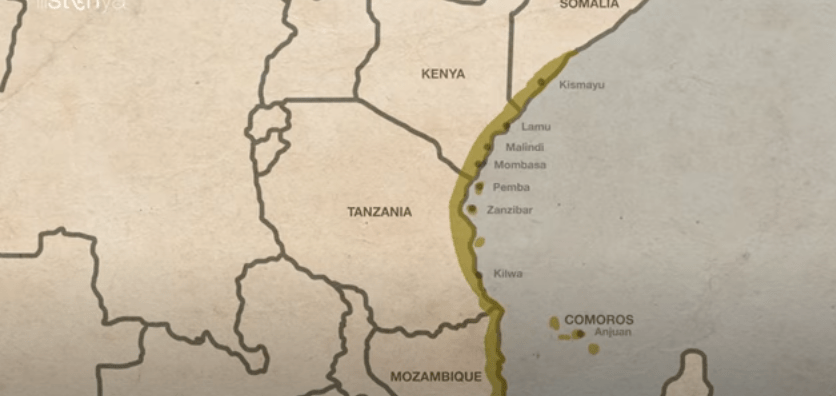
Though the Swahili people call their language KiSwahili, the ‘Ki’ means ‘language’, so it means the Swahili language. Kenyans and Tanzanians mostly learn KiSwahili as a second language and English as their first. Swahili people speak KiSwahili as their “mother tongue,” because it reflects their complex history and mixed origins. The Kiswahili language has borrowed many words from the Arabic languages, though the KiSwahili grammar and syntax place it in the Bantu language family, which has roots in the African continent. Like many Africans, Swahili people also use English in their daily lives, specifically in schools, government offices, and the tourist industry.
Many have stated Swahili comes from the word Sahil meaning coast in Arabic. Another theory is that since most Swahilis lived on Islands they may have been referring to themselves as wa siwa hili, the people of this island. Swahili people includes people connected by blood and culture.
Here is some music
 LANGUAGE MADNESS