😀The following English words come from Wiradjuri: wee-RAD-ju-Ree. Rhymes with menagerie.
kookaburra – a species of kingfisher
billabong – a branch of a river forming a stagnant pool,
Viena’s ten words in Wiradjuri
valley, gully: gulgama
baby: wanggaa
belly: binbin
above: ngaguway-wala
earth, dirt: dhaagun
kangaroo: bandhaa
cheek: dhagal
hailstones: dhandha-la
fall: bundi-nya
cake: wigay
house of white man: gilguuma
Viena’s Ten Phrases in Wiradjuri
Do you feel cold – yama-ndhu baludharra
Do you understand Wiradjuri – yamandhu gulbarra Wiradjuri
Elders are important to me – Dhirrangal nganhalgu mudyigandhi
Go to the bush – birramal-gu yanha-y-aan
Go to sleep it is very late – yuray wirri-dya dambulbang ngi nhi
I am not sleepy – wiray Dhuray
I am proud to be wiradjuri – dyiramadilinya badhu wiradjuri
He came when the sun was setting – guwiiny buwaga-yi yandu yiray wuurrangga-nhi
I thought it would rain – ngahhu winhangaan ngadhanga Galindyua yubalgirri
I thought it would rain – ngahhu winhangaan ngadhanga Galindyua yubalgirri
OK mate, you pick me up: ngawa bidya, wulagirringhunyalgu
Ezra’s Ten Words
scream: warraanha
near:dhundhal
tall: baamirgal, ganywal
Zebra finch: muliyiin
lagoon: gawuwal
canoe paddle: bundharraan
ocean: gadhang, gadhung
necklace: bugang
fatherless boys: dyagang
night: mulaa
Ezra’s Ten Phrases
The first burnt my hand: Wiindyu marradhi Ganhan
Yes brother, I will see you tomorrow: Ngawa daling, ngaagirridhunyal ngariyawa
You are lame, you are limping: Wirrga-nha-ndhu
The wind will bring rain: Giraaru galing gaanhagirri
The clouds are dark: Yurunggalang Budhang
O.K mate, let’s go: ngawa bidya, galiyanhagili
What are you eating?: Minyandhu dhaIgunhanha
Will you give me a knife please?:Galigal nganhalgu ngunggirrindhu dharraay?
Yes, I have my fishing and nets ready, I hope we catch plenty of fish to feed the mob: Ngawa, bugu-I-dhuray-dyu-bu marraanba-bu, ngindi-dyu badhambili nulabanggu Guyagu bagarayagan
I will care for my enemy: Bilingalgirridyu ngadhigu madhugu
HISTORY
The Wiradjuri people also known as the people of the three rivers, have inhabited New South Wales, Australia for at least 60,000 years. Before the European invasion 200 years ago, an estimated 3,000 Wiradjuri lived in the area which is bordered by the Macquarie, Lachlan and Murrumbidgee rivers.
The Wiradjuri people were a huntergatherer society, made up of small family groups of around thirty men, women and children, moving between different camp sites across their traditional lands, which covered an area of approximately 40 square miles.
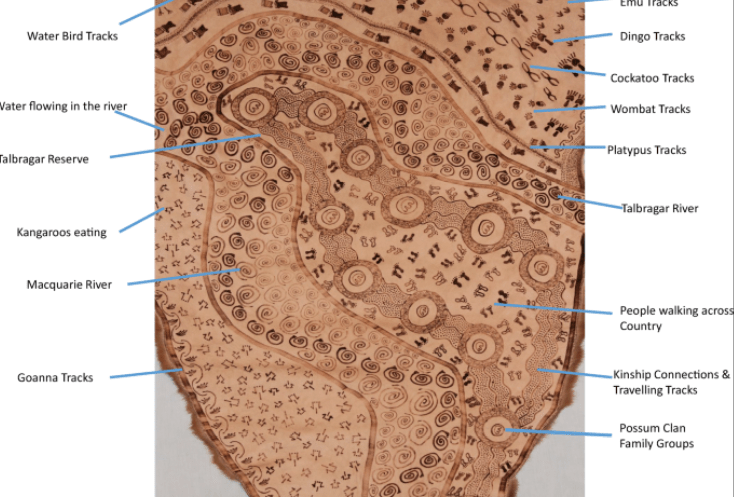
The Wiradjuri people made journeys around the Wambool River. The Wiradjuri fished, hunted and harvested the land with spears and nets for duck, kangaroo, goannas, snakes, lizards, emus, possums, wallabies, waterfowl and plants
The Wiradjuri people traveled across their continent for trade and to perform ceremonies to honor their ancestors, The Wiradjuri people honored their dreams and had a sacred relationship with the land.
The White invaders created a loss of their hunting ground for the Wiradjuri. They could no longer live independent. They were relocated from their land.
Today, Condobolin Australia is one of the largest Wiradjuri communities.
I like how this language sounds. There is lots of r rolling and they talk fairly slow. I also like how the Wiradjuri talk a lot about respecting your elders and feeding the people. Which I like because my people talk in this way… and I like food :). -V
 LANGUAGE MADNESS